with Mia LaRocca of Setteuarciate
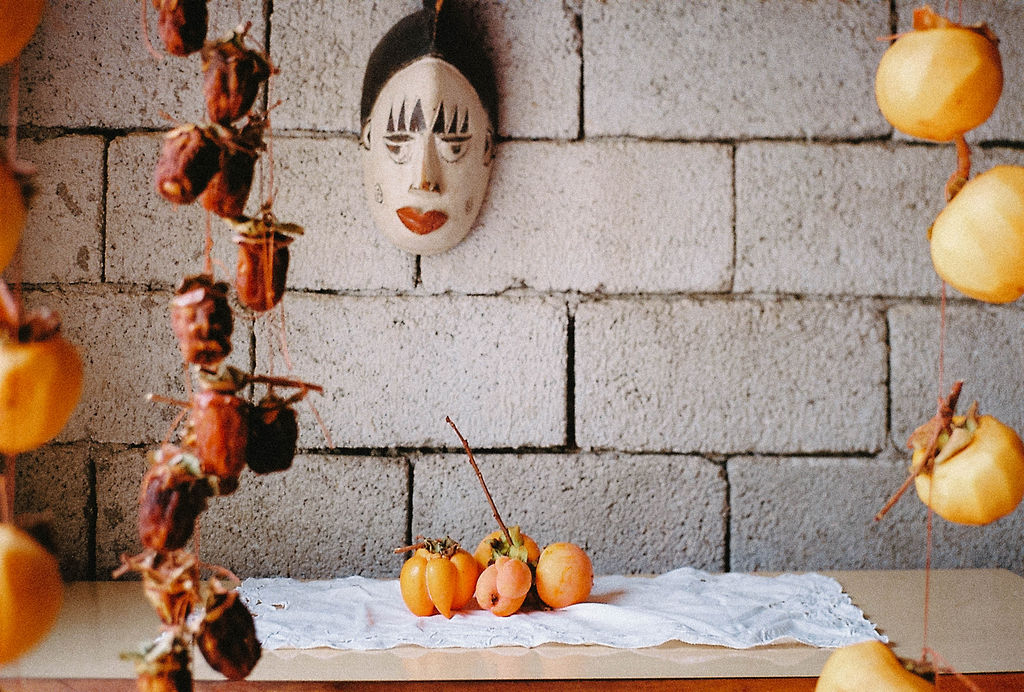
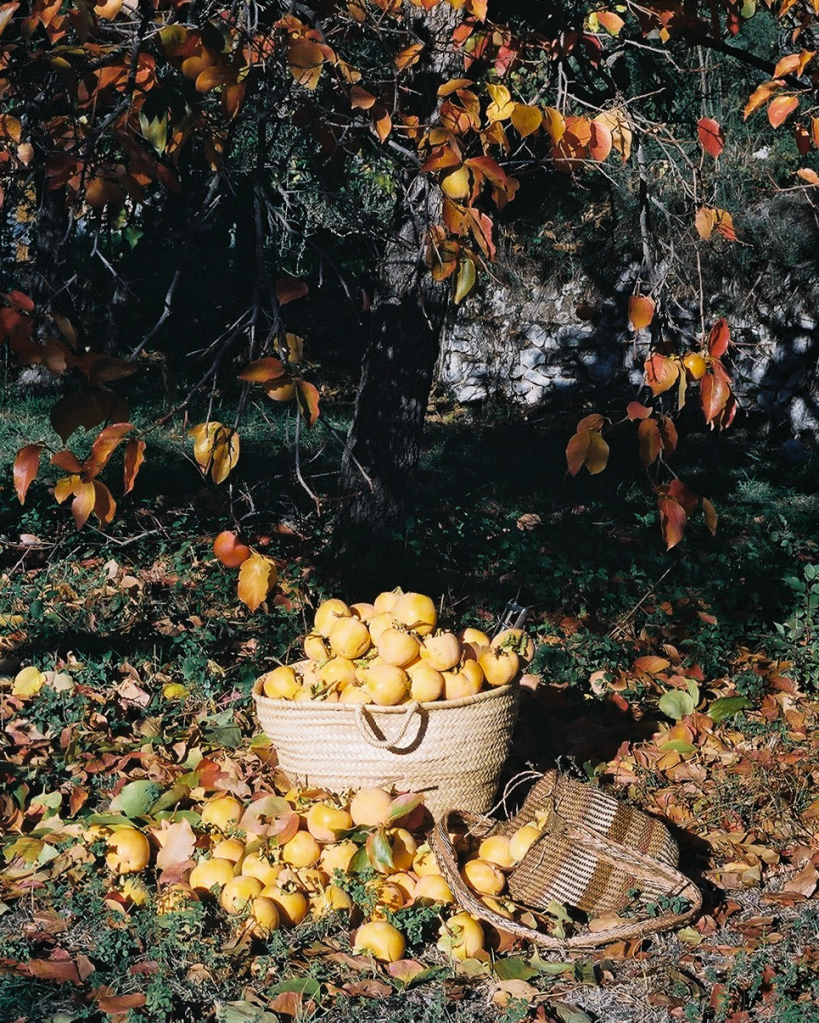
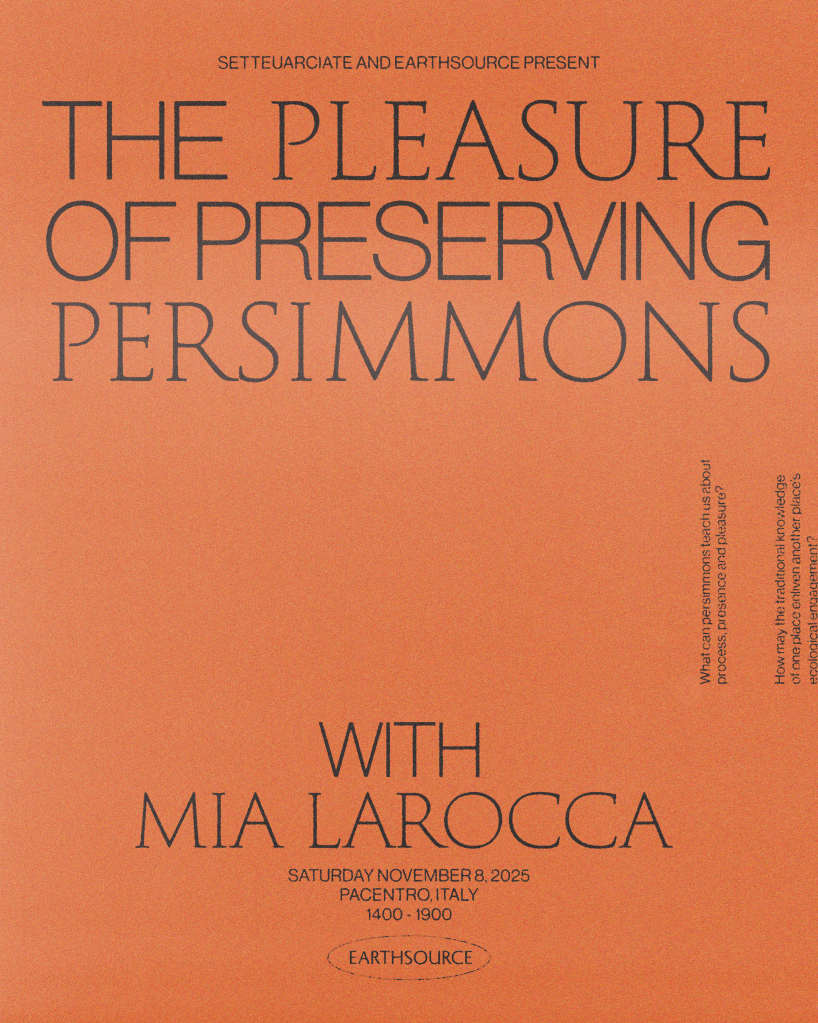
On Saturday, November 8 of 2025, in collaboration with MiaLaRocca from Setteuarciate, Earthsource honoured the ancient Japanese technology of hoshigaki to a small village nested in the Appenine Mountain Range in Italy. Along terraced slopes, persimmon trees thrive in quiet harmony with olive groves, goats, and grapes. The dry climate and the marked seasons cast on this section of Italy’s green heart make for the perfect conditions to dry-preserve persimmons and it didn’t take long for Mia to come to this realisation. Mia has been preserving persimmons for a couple of years, attentively tinkering with time, touch, and taste.
We came into Pacentro to learn from Mia and collaborate with her to offer the hoshigaki experience to this quiet village of one-thousand inhabitants. Like in most Italian rural realities, religion and food traditions–often synonymous–color people’s lives. Food culture in Italy runs deep and is beautifully enmeshed with place and pride. Preserved foods are as commonplace as much as they are revered. We reflected on the fact that the persimmon tree was brought from Japan to Italy in the seventeenth century yet the interspecies culture between humans and tree was lost somewhere along the way. This was sadly the case for many colonial ventures; famously the potato, which was brought into Europe and widely planted without the bright agricultural insight of the Incan empire from which it originated. The consequence; famine in Ireland as the potato monocrop was easily devoured by the water mold Phytophthora infestans.
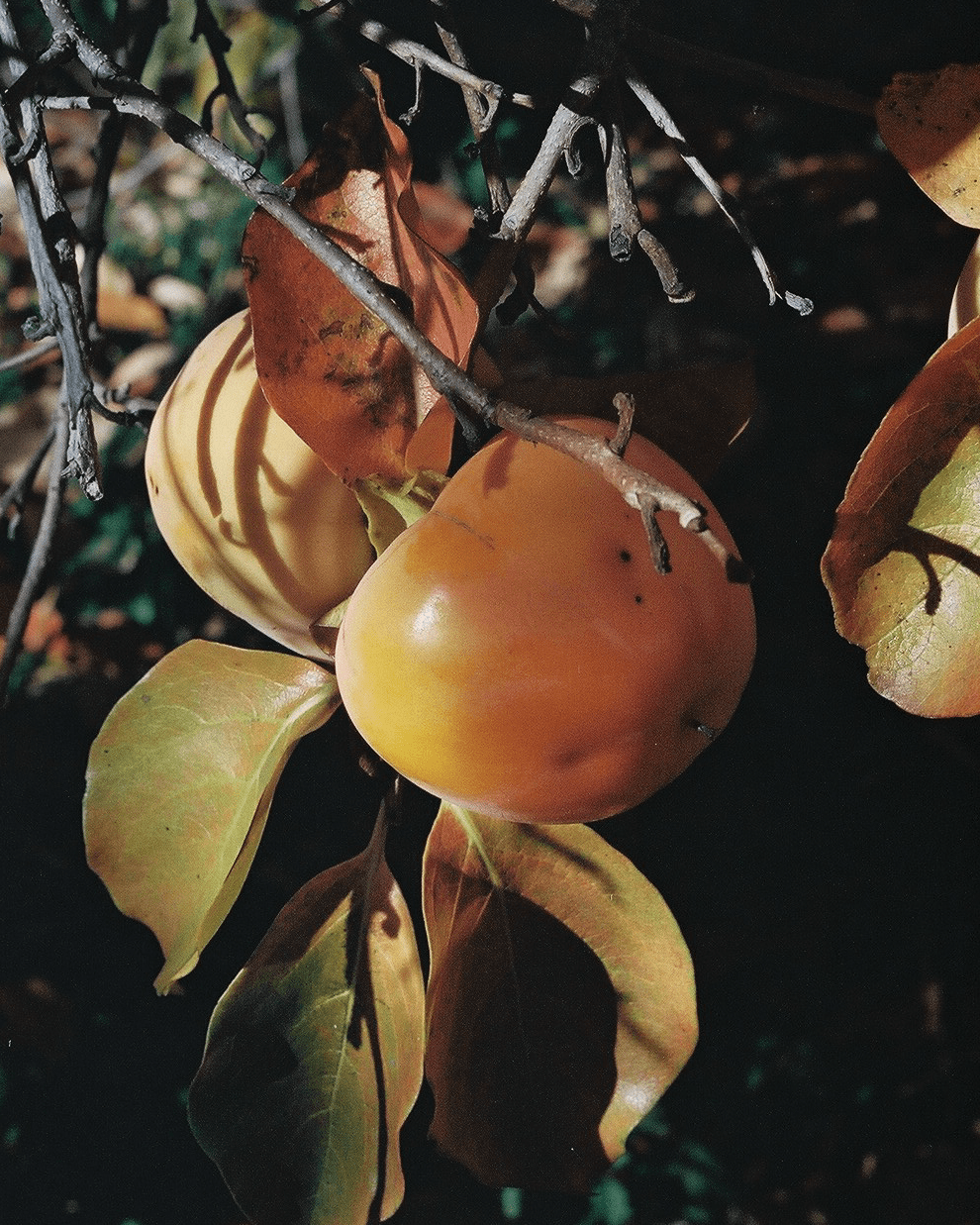
Persimmons fit perfectly with the autumnal sunset of the Majella Mountain Range; their leaves turn to multiple shades of warmth as the tree concentrates its energy towards making perfect spheres beaming with the juices of transformed sunlight.
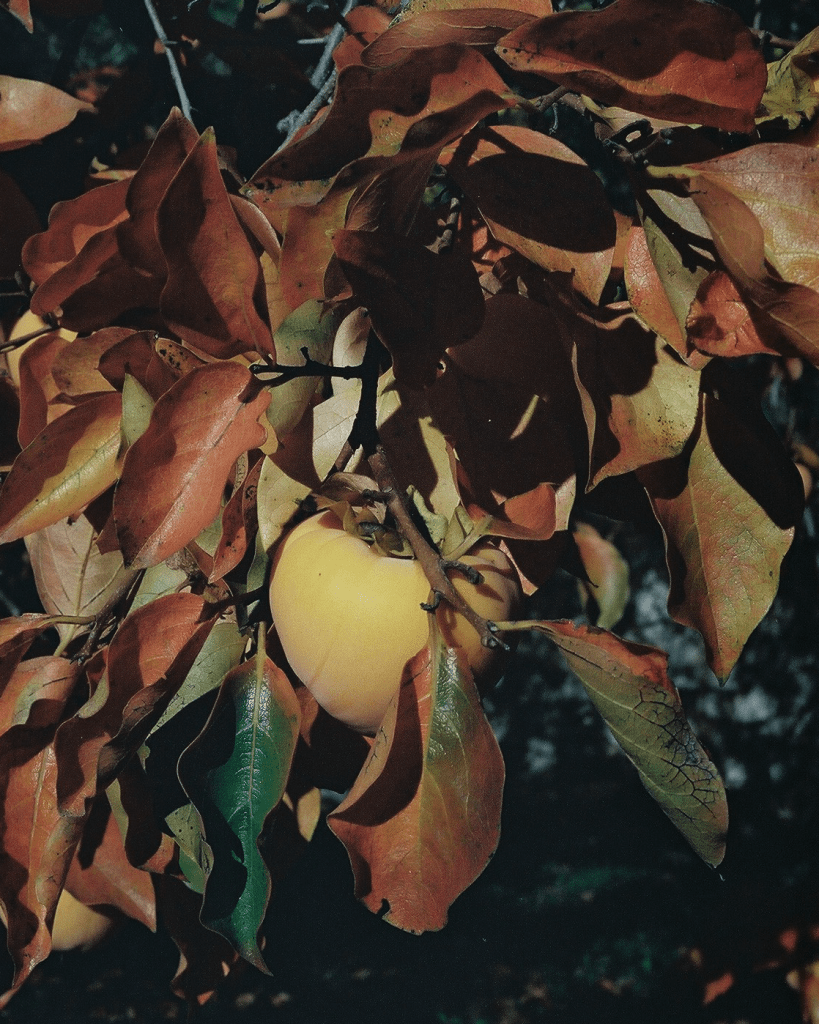
We gathered to harvest persimmons for hours, coming into intimate relationship with the tree; letting it remind us of our togetherness and our own fruitings. Gratefully receiving and preserving its bounty is one way to honor the tree’s generosity. Praise and pleasure can be synonymous to prayer.
Hoshigaki, like many food preservation techniques is deceivingly simple. It asks us to come into the realm of the sensuous and tune into the temporal ryhthms and life processes of other species.
After harvesting the fruit, we peeled, hung, and gently massaged them as the sun descended behind the mountain. We ate last year’s dried persimmons with parmiggiano regiano, local goat’s milk ricotta from Alla Casa Vecchia, and a lovely persimmon tart. Biting into hoshigaki brings into our sensorial orbit the tastes and smells of caramel, dates, dried apricot and coconut with a texture unlike any of these.
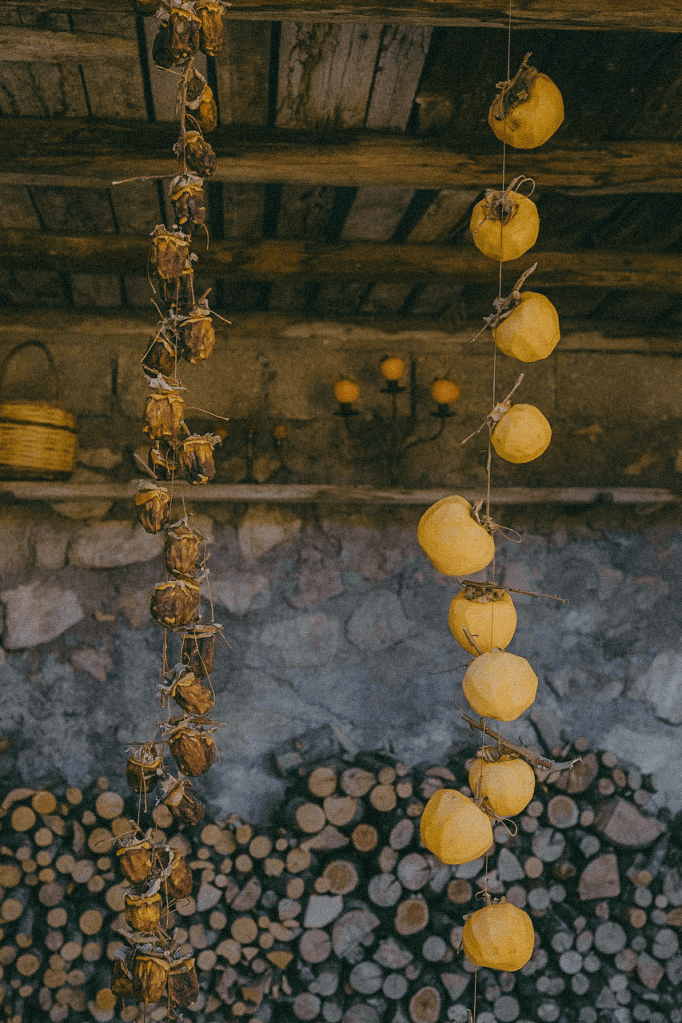
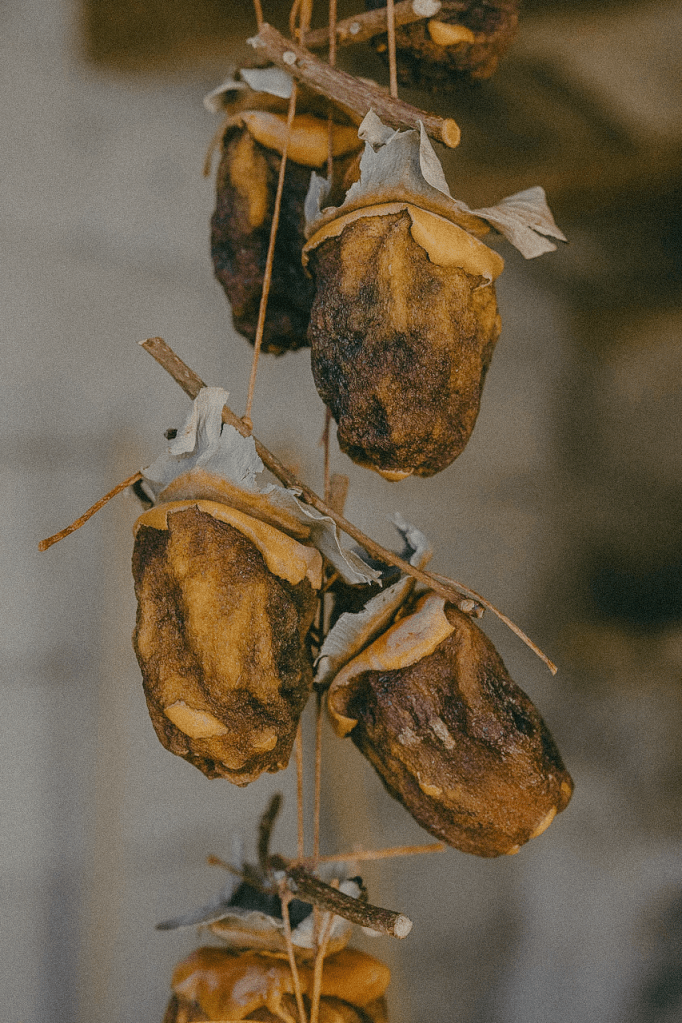
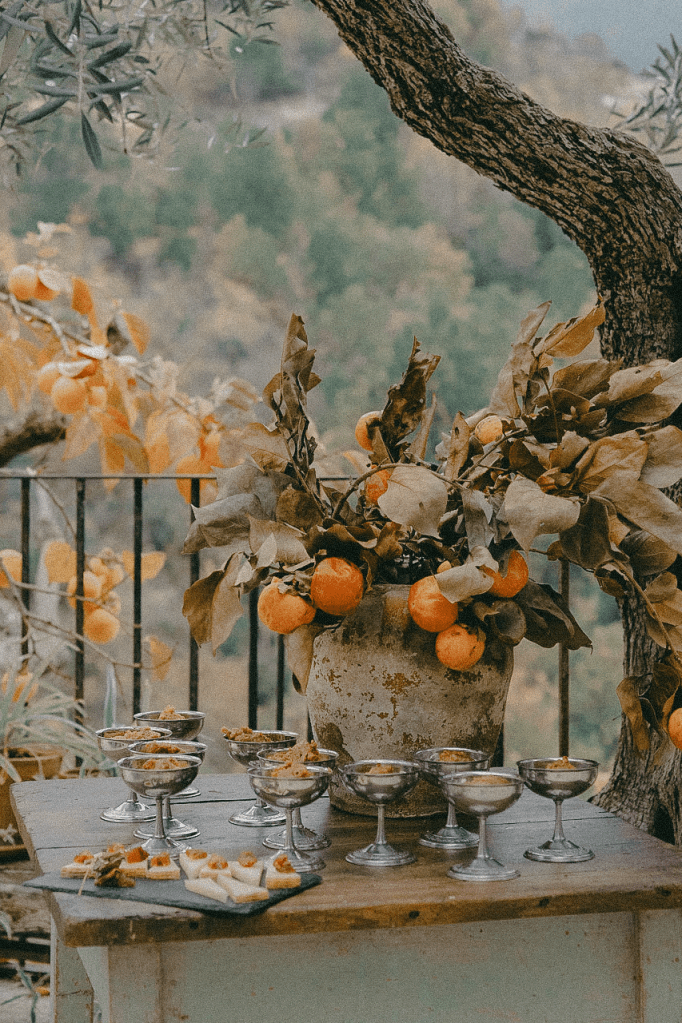
The process of touch and care, which continues to direct the drying and decay process of the fruit in the right direction, was continued by Mia over several weeks. When the persimmons were ready, Mia offered them to the people that participated in the workshop and word of the delicious sweet preserve spread across town. Hoshigaki, perhaps understood best as a pathway towards deeper connection with the local environment, may slowly become a ritual for the Pacentrani. It is part of the cultural and ecological revival that Mia is stirring in Pacentro.
If you are interested in joining us for the next hoshigaki experience or other ways to come into intimate relationship with persimmons, mulberry trees, or bees in Italy make sure to subscribe to our newsletter.