
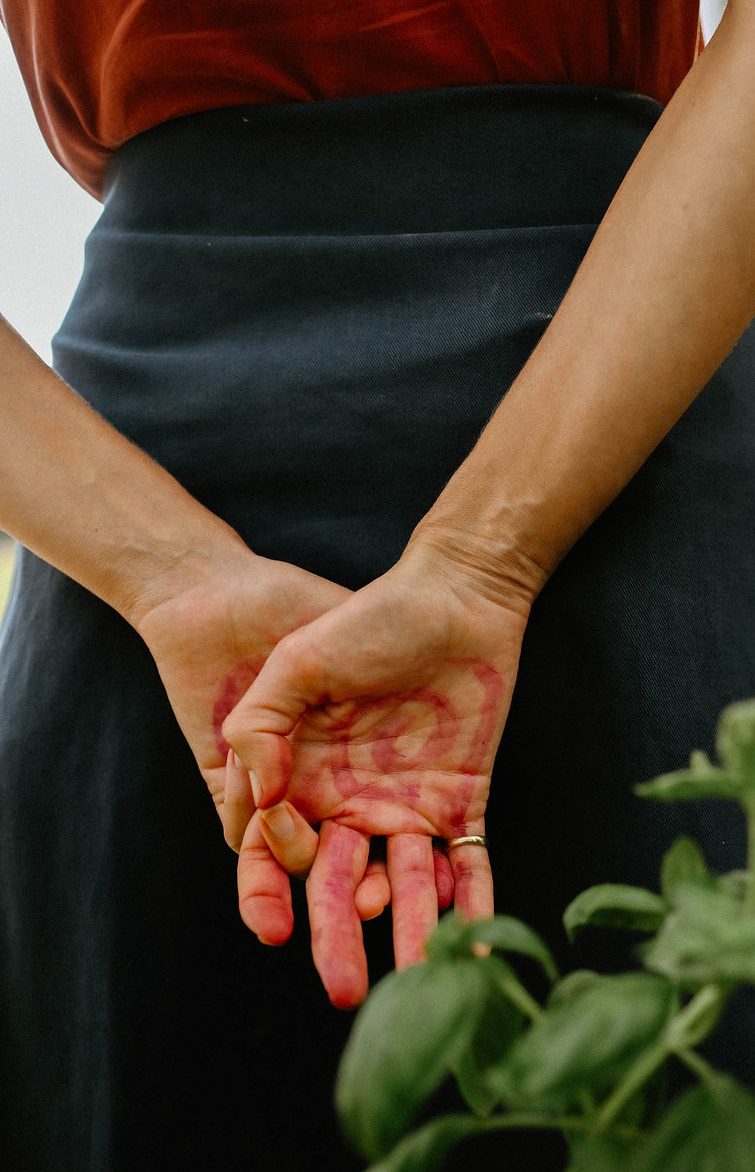
at Vivid Farms, Portugal
PHOTOGRAPHY BY SKY LAHOOD AND VALENTINA AMARAL
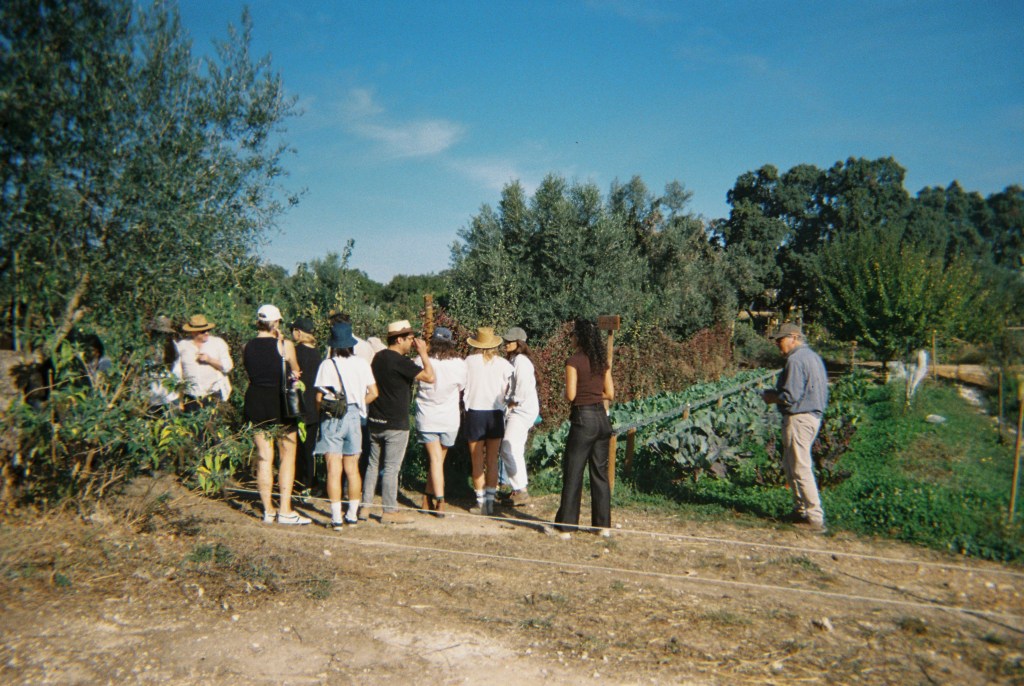
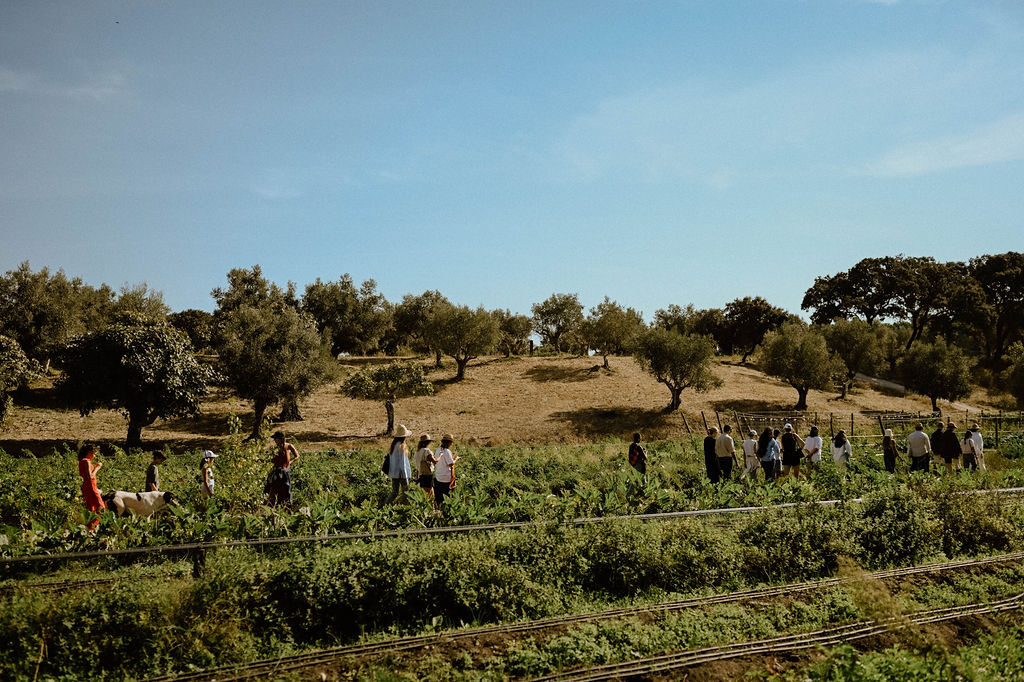
Today we reminisce on this memorable day at Vivid Farms, one of Portugal’s leading regenerative agriculture initiatives, one that is actively engaged in leading Portuguese food systems towards more biodiverse and resilient manifestations. On a warm Saturday, October 18 of 2025 we gathered there to enliven our senses and our thinking around food, flavor, and future.
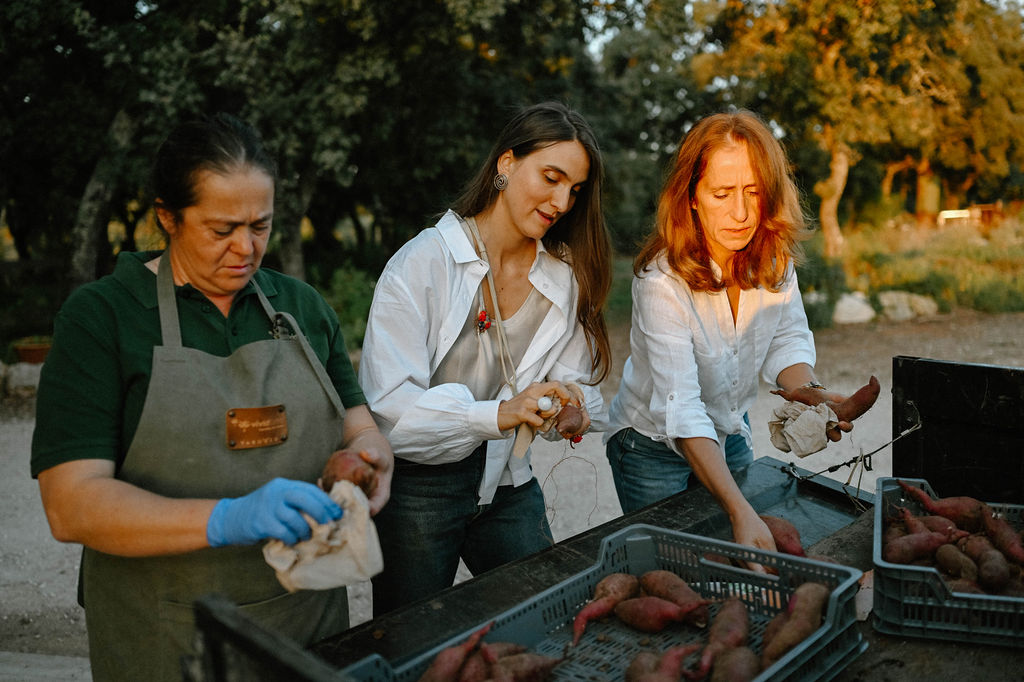
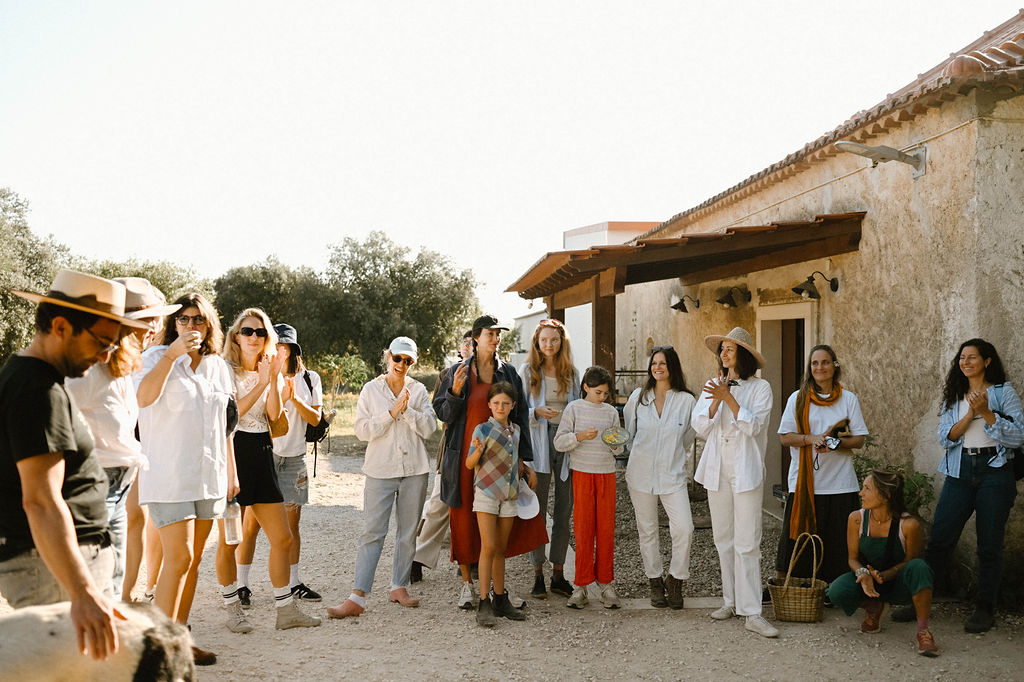
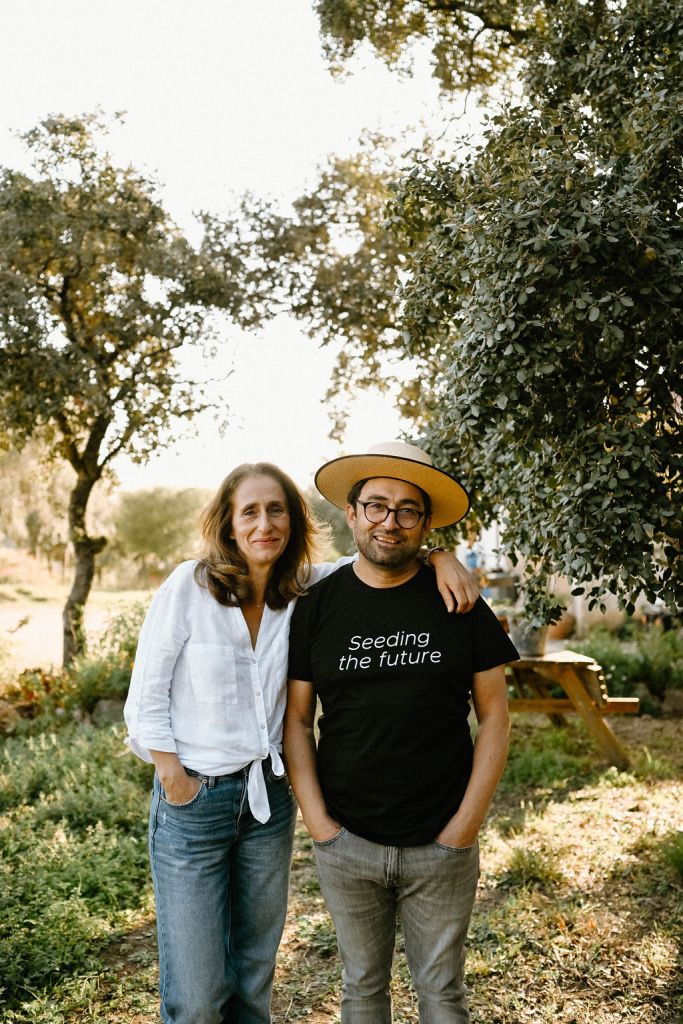
Vivid Farms is a regenerative farm system aiming to drive systemic change in the food system through education, innovation, and collective effort. The farm understands humans as part of a living ecosystem; a network of diverse organisms, each with a vital role.
Paulo Carvalho and his team at Vivid Farms regenerated 20 hectares of depleted, heavy, clay soil and turned it into a thriving agroecological system in just two years. The farm is now a biodiversity hub that showcases the abundance that grows from working in sync with nature’s cycles.
Paulo’s journey to regenerative farming began in the food industry as founder of Vivid Foods, a successful conventional food processing company. But success brought perspective—he began questioning whether marketing food was enough when the system itself needed fundamental change.
His conviction led him and co-founder Ana to transform and steward this land. Today, Vivid Farms supports over 70 vegetable species and 23 fruit tree varieties. They source people, restaurants, and institutions in Lisbon and Santarém while serving as an educational platform that’s making regenerative agriculture the standard.
The Carvalhos curate an effervescent educational program that involves local universities and institutions, farmers, healthcare professionals, artists, consumers, and scientists across fields. Some of their events are specific to one of these demographics while in other events they bring everyone together to cross-pollinate. They are seeding the future with health, flavour, and community.
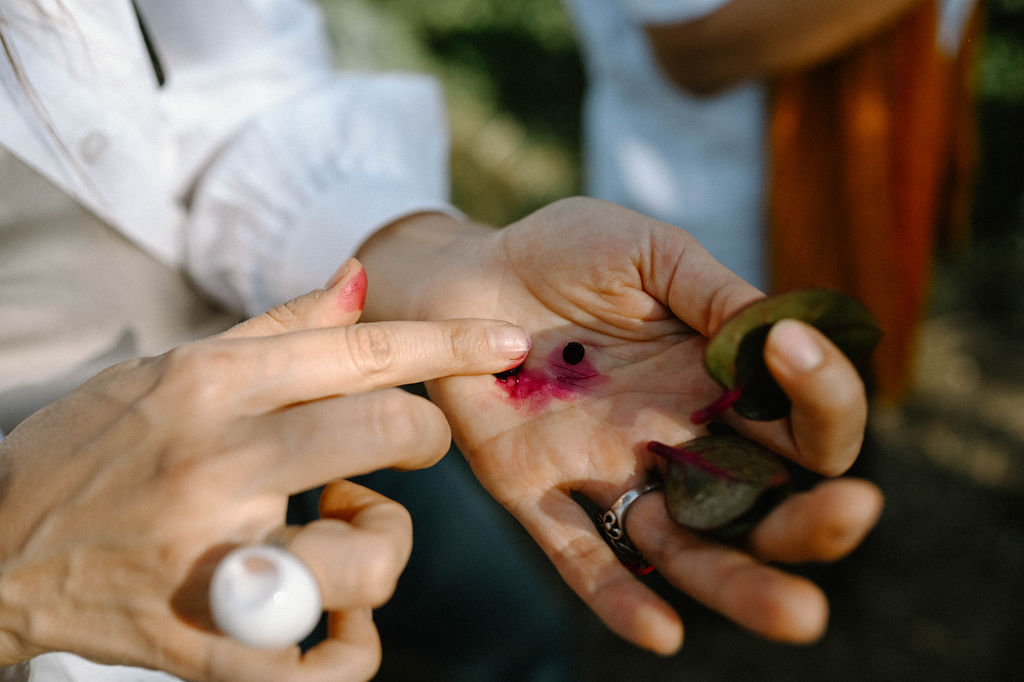
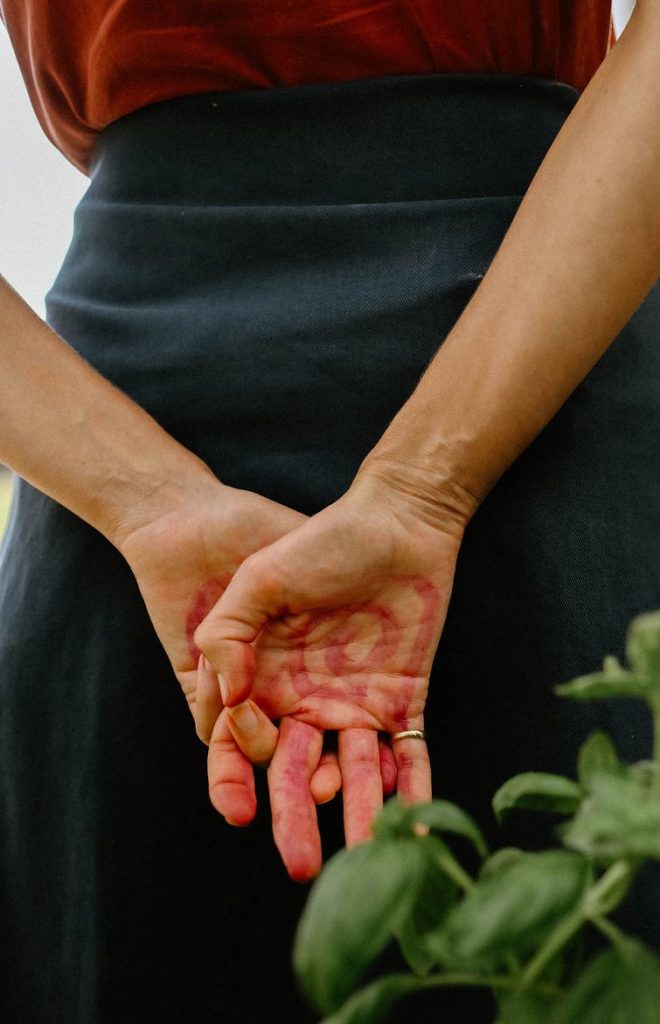
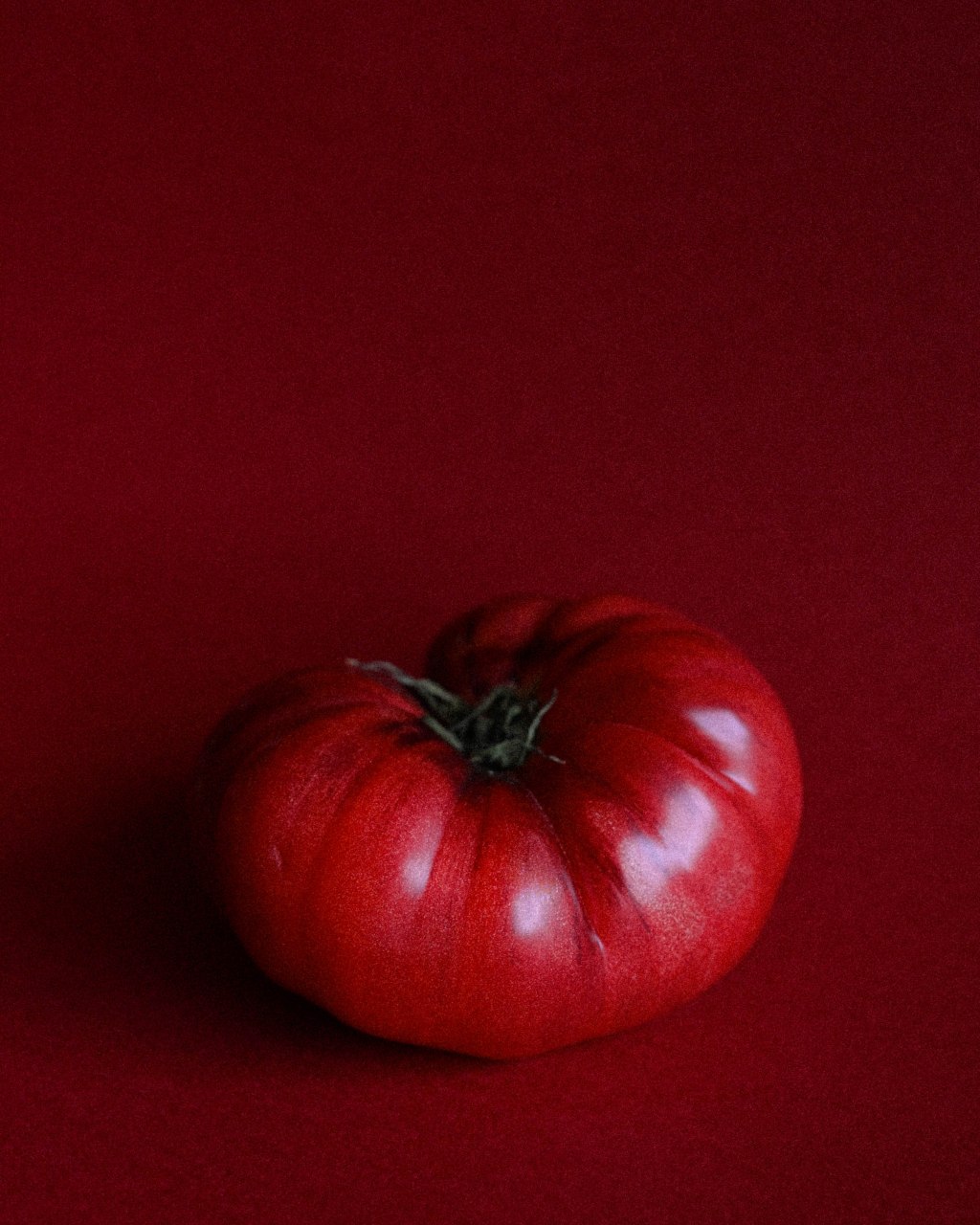
On that special day last autumn, the people that joined us were led through the farm by its keepers, having the opportunity to experience first-hand the differences in the soil’s color and aliveness. Ana invited us to taste, touch and connect with the expressiveness of different plants. We encountered giant okras that were allowed to grow past their tenderest moment for seed collection. We tasted several varieties of the last tomatoes of the season that had soaked up an entire summer of sun, letting our bodies perceive the difference between varieties, the tomatoes grown out in the fields, and the ones grown in their greenhouse. To be honest, it was hard to pick the most flavorful. The greenhouse tomatoes grow in good company with clover, marigold, basil, and sesame among other plants and insects. Sesame plants are deliberately incorporated to distract the pests from attacking the tomatoes. Clover fixes nitrogen on the soil, and so on. Among the many ecological encounters of the day was basella rubra, a juicy spinach variety native to India. It tasted like a cross between beetroot and spinach with the crunchy, juicy texture of coastal wild greens. Its fruit makes for a convenient, toxin-free, tasty lip stain.
People had a chance to engage with a wide array of agroecological practices both conceptually and with their senses. We were introduced to biointensive vegetable beds, olive groves, biochar, large scale composting, plant nursery, holistic grazing, companion planting, greenhouse tomatoes, water retention, compost teas, asparagus field. Throughout the day, we learned about the many ways in which Paulo and Ana are regenerating their soil as well as the Portuguese food systems at large.
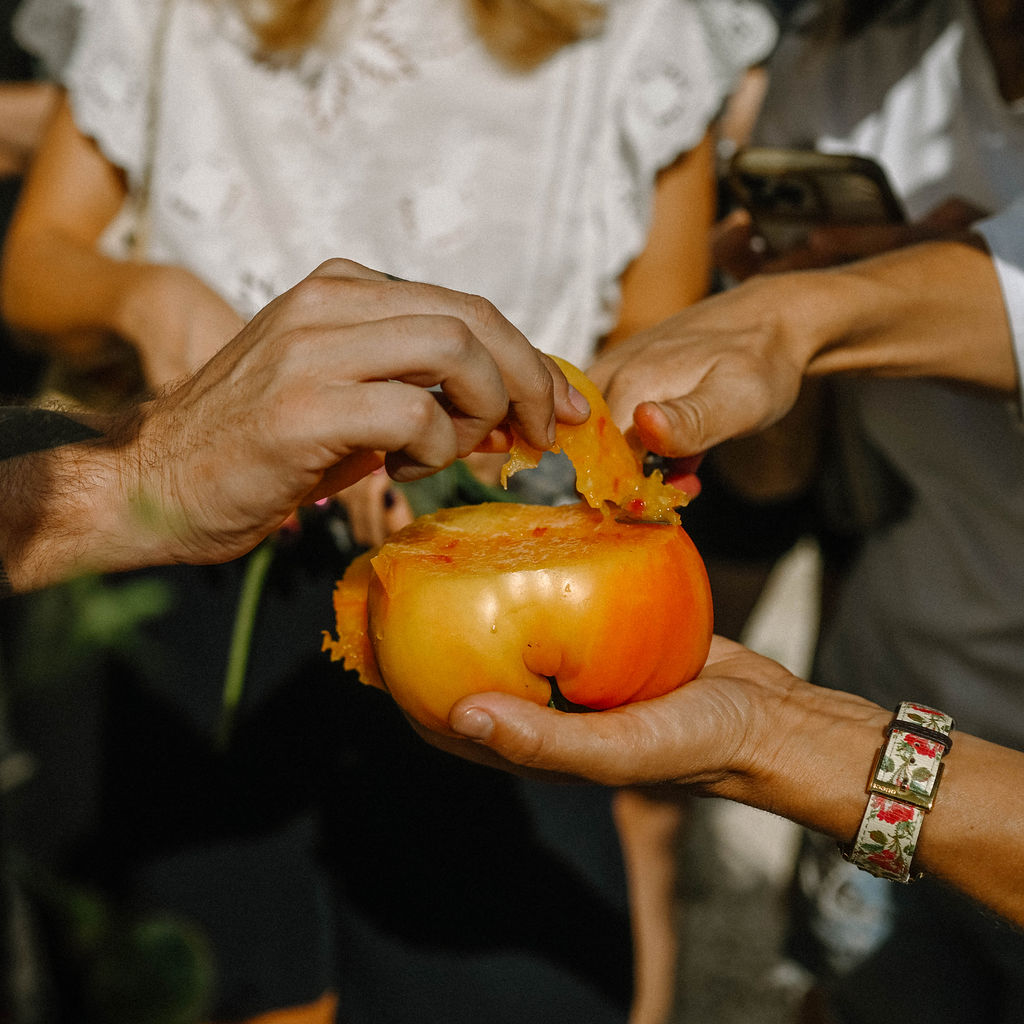
Lara Espirito-Santo and George McLeod, founders of Lisbon’s renowned zero-waste restaurant SEM, created and cooked a harvest lunch with ingredients from the farm. People could further experience the taste of food grown in living, cared for soil and circular systems. The abundance of life was colorfully manifested on our plates. Beyond a restaurant, SEM is a movement that is actively having a positive impact on Portuguese local food economies and soils; supporting regenerative projects and honoring life every step of the way.
Chef George McLeod’s kitchen is driven by innovation, foraging, fermentation, and micro-seasonality. It consistently offers nutrient dense food that takes our tastebuds on unprecedented rides and highlights the rich possibilities of the landscape at any given moment.
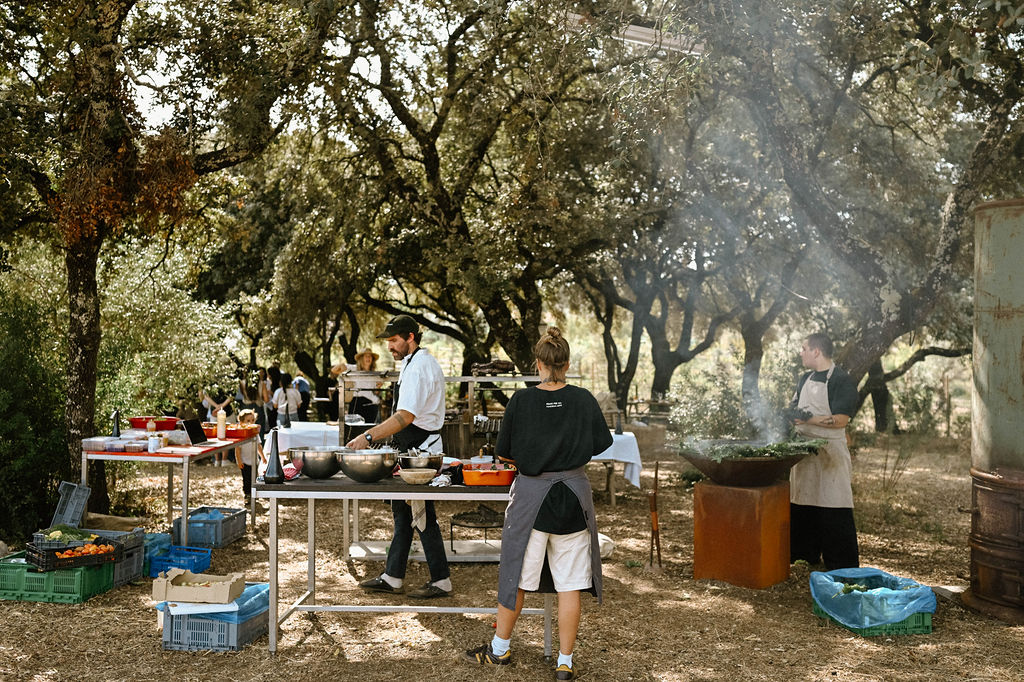
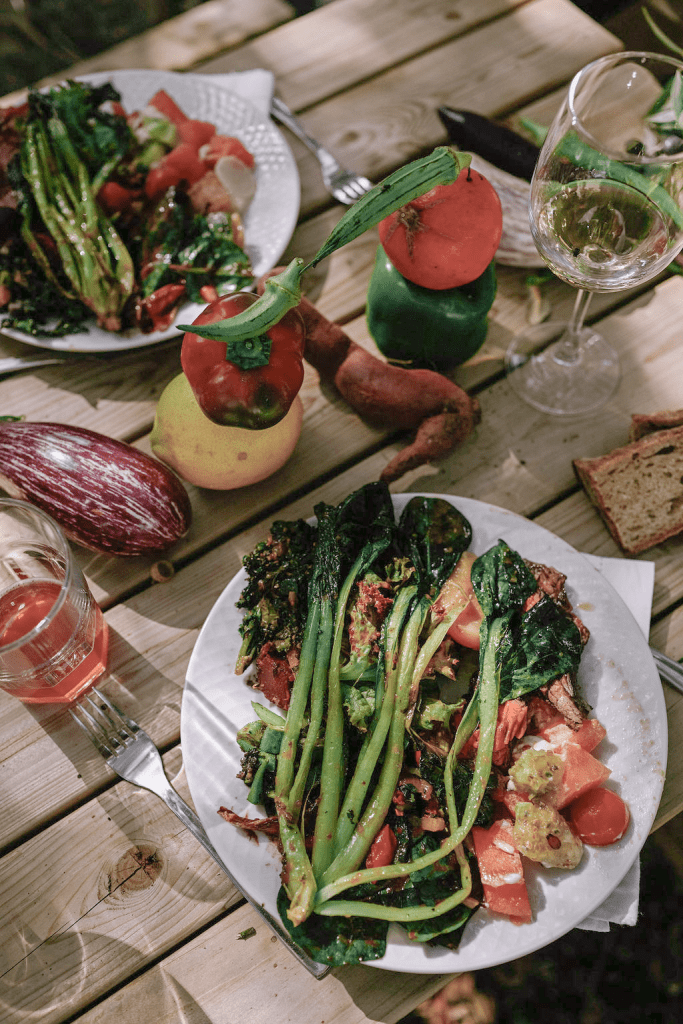
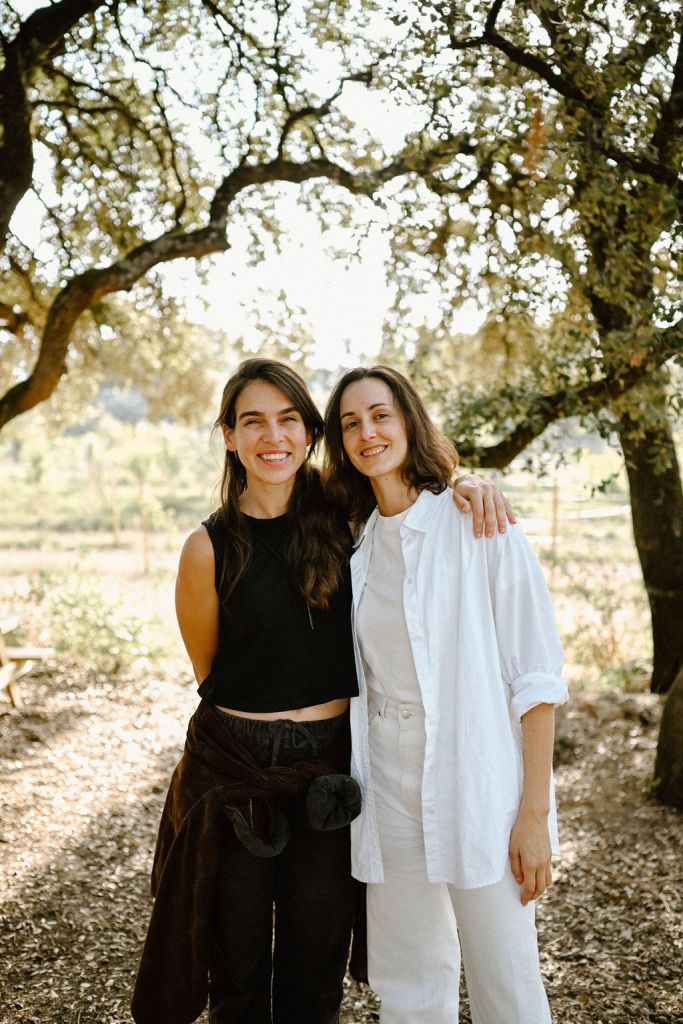
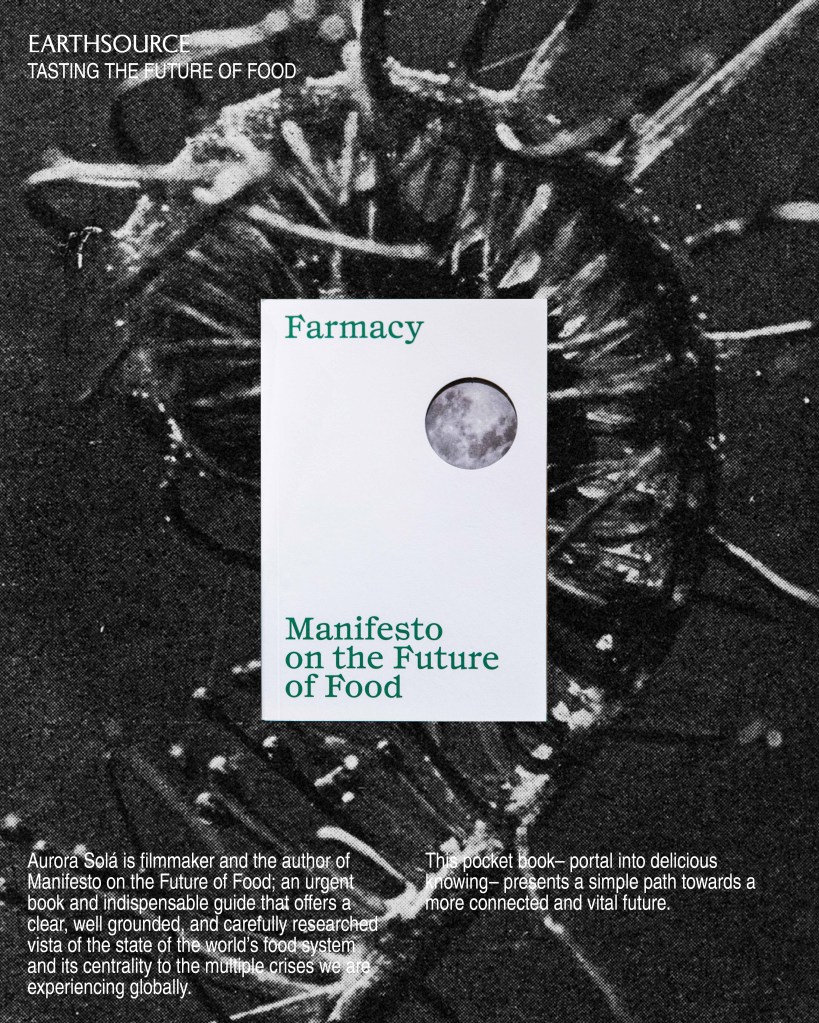
Aurora Solá is a writer and filmmaker that investigates how we relate to and become landscapes. She is the author of the urgent pocket book, Manifesto for the Future of Food, which has become a field guide and pocket companion for a growing number of us. Aurora shared her invaluable insight along the farm walk throughout the day.
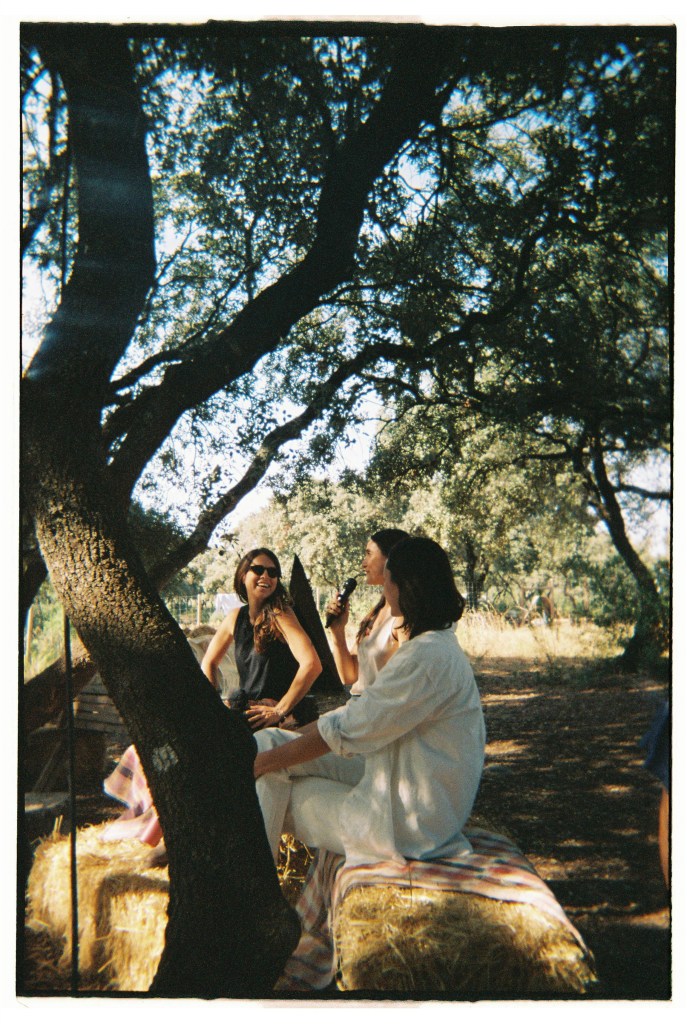
After lunch, during drinks and dessert, Aurora and Lara introduced people to Manifesto for the Future of Food, bringing everyone into an engaging conversation about the futures we are creating through our present food choices. The wines were all from different biodynamic and ecologically sensible artisanal productions. We tasted a couple of innovative non-alcoholic beverages made with koji–Japan’s celebrated national microorganism which you will surely hear more about on Earthsource. The flavor notes and scents made airborne via these beverages offered people new sensorial pathways to our world’s microbial aliveness.
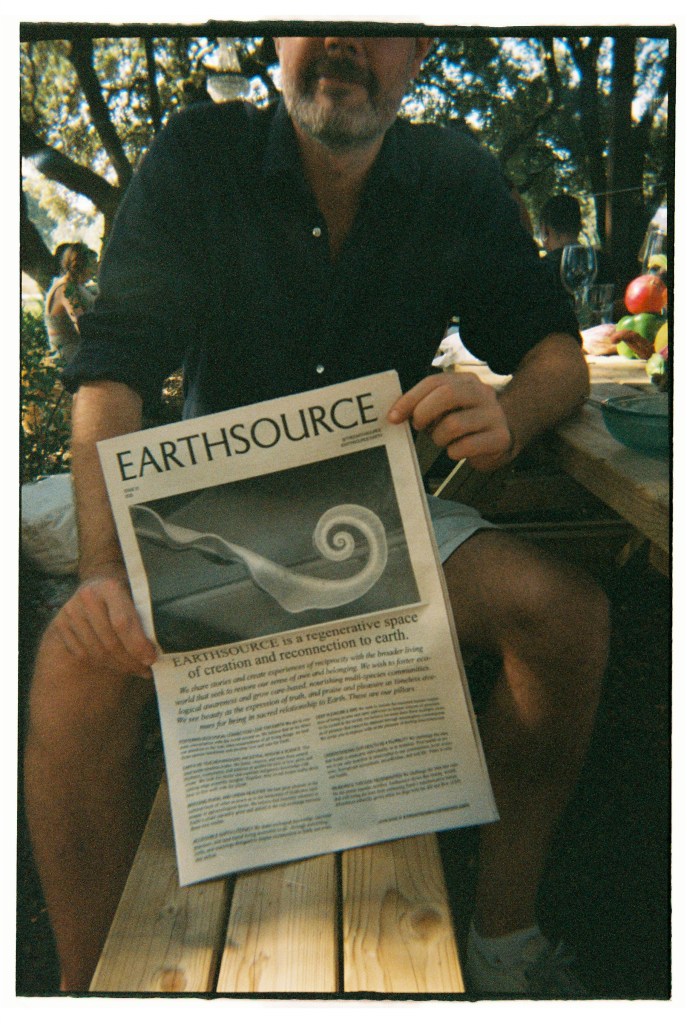
We leave you with our favorite quotes and images from Farmacy’s Manifesto for the Future of Food and a sneak peak into Earthsource’s newspaper first volume.
“We can orient around a very simple definition of regenerative agriculture: a kind of farming that produces food while improving the conditions for life and food production in the future.” Page 36
“It is time for the festival of regenerative agriculture to move to the centre of our civilization. The methods tinkered with over the last century are ripe for scaling. Soil-informed agronomists understand how to ensure that the yields of calories and nutrients per acre remain high.” Page 37
“About 75% of food available at supermarkets comes from genetically altered seeds that have been designed to grow in monocultures and survive biocides.” Page 90
“Between 2020 and 2022, even as the global pandemic and the war in Ukraine affected natural gas prices, profits for the world’s largest fertiliser companies meanwhile soared from $14 billion to $49 billion. Profit-taking of this sort occurs across the food system. Market power also translates to the power to shape ideas in society more broadly. Chemical giants spend millions every year lobbying governments to approve synthetic chemicals and fighting against the labelling of genetically modified crops.” Page 93
“While humanity has as many as 14,000 edible and nutritious plant species to choose from, we are relying on just 12 crops and 5 animals for a staggering 75% of our food. Of course, the consequence is that our nutrition is drastically narrowed as well, and this impoverishment is translated to our health.” Page 94
“To be sustainable, the food of the future must be predominantly local, coming from local farms adapted to the local environment, providing for a local community,, activating a local network of exchange and support. Local food networks are more resilient to changes in climate and financial shocks and shift the balance of power away from corporations and back to actual people: farmers and eaters. Local food is also fresh food—with more nutrients and flavour.” Page 95
“Because food connects our inner and outer landscapes, the regeneration of soil can be the cause and consequence of the regeneration of the human world. A healthy soil supports a healthy gut. A healthy gut supports a healthy mind. A healthy group of minds can give rise to a thriving culture that continually invents new harmonies with its surroundings.” Page 111
 EARTHSOURCE